
The Real Deal on Thai Massage in Dubai
Let’s be honest. Living in Dubai is an amazing, chaotic, wonderful grind.
We work long hours hunched over laptops (hello, “Dubai Marina neck”). We spend weekends navigating packed malls or trying to out-do last week’s brunch. We sit in traffic on Sheikh Zayed Road. And our bodies? Our bodies keep the score.
For years, I walked past dozens of “Thai Massage” signs in JLT, Barsha, and the Marina. I was curious, but also… a little scared.
Wasn’t that the one where they, you know, walk on your back? Will they fold me into a human pretzel? Is it going to hurt?
I stuck to my “safe” Swedish and deep-tissue massages. But my back pain wasn’t going away. Finally, a friend (who swears by it) dragged me to a session.
I’m not exaggerating when I say it changed everything.
If you’re curious about Thai massage in Dubai but don’t know where to start, this is the guide for you. I’m going to break down what it really is, why it’s different (and, in my opinion, better) than other massages, what to expect for your first time, and how to find the perfect experience for you in this city—from a 199 AED home service to a 900 AED luxury spa day.
So, What Even Is a Traditional Thai Massage?
First things first: forget everything you think you know.
A traditional Thai massage, or “Nuad Boran,” is not your typical spa treatment.
- There is no oil. (Well, usually not. We’ll get to that.)
- You stay fully clothed. They’ll give you a set of loose-fitting, comfy cotton pajamas.
- It’s not on a high table. It’s done on a firm mat on the floor.
The best way to describe it is “assisted yoga” or “passive stretching.” Your therapist will use their hands, thumbs, elbows, knees, and even their feet to pull, stretch, and rock your body. They’ll apply deep, rhythmic pressure along your body’s “Sen lines” (or energy lines).
It’s a 2,500-year-old healing practice that’s part acupressure, part yoga, and 100% focused on restoring balance to your entire body, not just rubbing your sore muscles.
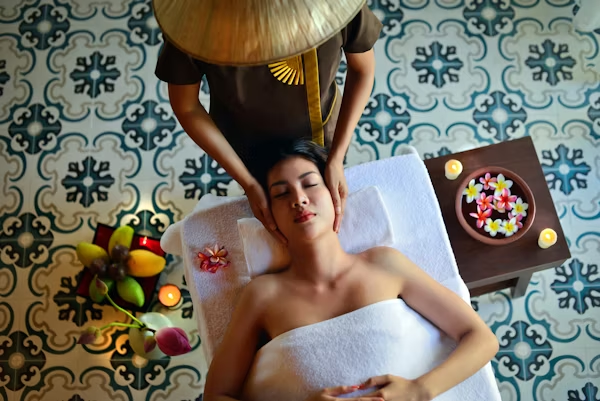
Why Bother? The Real-World Benefits I Actually Felt
Okay, so it’s “assisted yoga.” Why do it instead of just… going to a yoga class?
The marketing brochures will give you a long list of benefits. But here are the ones I actually noticed in my day-to-day Dubai life:
- Real, Lasting Pain Relief. That nagging lower back pain from my office chair? Gone. The stiffness in my neck and shoulders from “tech neck”? Significantly better. It doesn’t just provide temporary relief; it actively works on the source of the stiffness.
- You Feel “Longer.” This is a weird one, but it’s true. After a 90-minute session, I stand up and feel taller. The stretches decompress your spine and joints, and you walk out feeling lighter and more open.
- Insane Energy Boost. I expected to be sleepy afterward, like I am after a Swedish massage. Instead, I feel energized. By unblocking all those energy lines, it’s like a reset button for your body’s battery. I now prefer to go in the middle of the day, not before bed.
- Better Flexibility (Obviously). I’m not flexible. At all. But after a few sessions, I can touch my toes again. The therapist does all the work for you, gently pushing your body to its (safe) limits.
- Stress Doesn’t Just Melt—It’s Pushed Out. The rhythmic, meditative pressure is incredible for anxiety. It’s not the gentle “zoning out” of a hot stone massage; it’s an active process where you can literally feel the tension being pressed out of your muscles.
Thai vs. Swedish vs. Deep Tissue: What’s the Difference?
This is probably the most-asked question. Let’s break it down in a simple table.
| Feature | Traditional Thai Massage | Swedish Massage | Deep Tissue Massage |
| Main Goal | Realigning energy, deep stretching, flexibility, and holistic balance. | Pure relaxation, increasing blood circulation, and relieving light muscle tension. | Targeting specific, deep-seated muscle knots (adhesions) and chronic pain. |
| Technique | Acupressure, passive yoga stretches, rocking, and compression. | Long, gliding strokes (effleurage), kneading, and circular motions. | Intense, focused pressure using thumbs, knuckles, and elbows on specific points. |
| Clothes | You wear loose-fitting pajamas (provided). | You undress to your comfort level, covered by a sheet. | You undress to your comfort level, covered by a sheet. |
| Oils/Lotion | None. It’s a “dry” massage. | Yes, oils or lotions are used to reduce friction on the skin. | Yes, but often used more sparingly than in a Swedish massage. |
| Environment | On a firm mat on the floor. | On a soft, padded massage table. | On a firm massage table. |
| Pain Level | Can be intense, but it’s a “good hurt.” Highly communicative. | Very gentle and relaxing. Should not be painful. | Can be very painful as the therapist works on deep, stubborn knots. |
| Best For… | Full-body stiffness, low energy, poor flexibility, and stress relief. | First-timers, people wanting to de-stress, and relaxation. | Chronic pain, specific injuries (like a bad shoulder), and muscle tightness. |
A Quick Note on “Thai Oil Massage”
You’ll see “Thai Oil Massage” on many menus in Dubai. This is a popular hybrid. It combines the relaxing, gliding strokes of a Swedish massage with some of the acupressure principles of a Thai massage. It’s a great “gateway” if you’re not ready for the full traditional experience, but it is not the same thing.
The “Dubai Factor”: What Makes Thai Massage Here So Unique?
You can get a Thai massage in London, New York, or Bangkok. But the Thai massage in Dubai experience is a category all its own. This city offers a spectrum of options you won’t find anywhere else.
After years of “research” (it’s a tough job, I know), I’ve found you can break the Dubai experience down into three main categories.
1. The 5-Star Hotel Spa (The Luxury Splurge)
This is your Armani Spa at the Burj Khalifa, your Talise Spa at Madinat Jumeirah, or the Anantara Spa on The Palm.
- The Vibe: Pure, unadulterated luxury. You’re paying for the robe, the slippers, the private suite, the infinity pool access, the cucumber-infused water, and the hushed, opulent atmosphere.
- The Massage: The therapists are world-class. The treatment will be flawless, professional, and consistent. It might be slightly “softer” or more Westernized than a standalone center, but the quality is undeniable.
- The Price: The sky’s the limit. Expect to pay anywhere from AED 600 to AED 950+ for a 90-minute session.
- Best For: Anniversaries, a special treat, or when you want a full “day-cation” experience and the massage is only one part of it.
2. The Standalone Wellness Center (The Authentic Fix)
This is your local, dedicated massage center in places like JLT, Barsha Heights (Tecom), or Bur Dubai. Think of places like the well-known Dreamworks Spa chain or smaller, independent gems.
- The Vibe: No-frills and purpose-built. The reception might be simple, but the moment you enter the treatment room, you’re transported. The focus here is 100% on the quality of the massage.
- The Massage: This is often where you’ll find the most authentic, powerful, and therapeutic Thai massages. The therapists are often from Thailand and have decades of experience. They will find knots you didn’t know existed.
- The Price: This is the sweet spot for value. You can expect to pay between AED 250 and AED 450 for a 90-minute session.
- Best For: Regular maintenance, fixing actual pain, and getting the most authentic experience for your money.
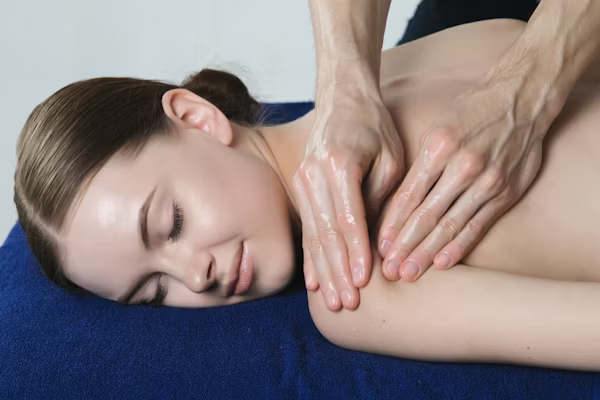
3. The “At-Home” Service (The Ultimate Convenience)
This category has exploded in Dubai. Companies like Sparsh Wellness or Shukran Home Spa bring the entire experience to your living room.
- The Vibe: Your own home! They arrive with a professional massage mat (or table), linens, and sometimes even a small speaker for music. It’s incredibly convenient—no traffic, no parking, no problem.
- The Massage: The quality can be surprisingly high. These services live and die by their reviews, so they hire certified and experienced therapists. It’s a full, professional treatment.
- The Price: The best value by far. Prices are highly competitive, often starting as low as AED 199 for a 60-minute or around AED 250-300 for a 90-minute session.
- Best For: Busy parents, working professionals who finish late, or anyone who wants to just roll off the mat and into bed.
How to Spot an Authentic Thai Massage in Dubai (A Pro Tip)
Here’s a little secret most people don’t know.
Dubai and the UAE have a strong relationship with Thailand. In fact, there’s an official “Thai Skill Standard” test. The Royal Thai Consulate-General in Dubai often works with the Thai Department of Skill Development to certify therapists right here in the UAE.
Here’s your pro tip: When you call a new spa, don’t just ask “do you do Thai massage?”
Ask this: “Are your therapists certified in the traditional Nuad Boran style, or do they hold a UAE skill standard certification?”
This one question cuts through all the marketing. The best, most authentic centers (like Taiy Pradit in Jumeirah) will be proud to tell you “yes.” It’s a great sign that you’re getting the real deal, not just a therapist who learned a few stretches last week.
Your First Thai Massage: A Step-by-Step Survival Guide
Okay, you’re convinced. You’ve booked your appointment. Now you’re nervous.
Don’t be! Here is exactly what’s going to happen, from start to finish.
Step 1: The Arrival & The PJs
You’ll arrive and check in. They will offer you some tea (usually ginger or lemongrass). They’ll ask you to fill out a form—be honest here! Tell them about any injuries, your pain points, and (most importantly) your pressure preference.
Then, they’ll lead you to a room and hand you a set of loose-fitting cotton pajamas (a top and drawstring pants). You change in private and leave your clothes in a locker or basket.
Step 2: The Foot Wash
In most traditional places, the ritual begins with a warm foot wash in a bowl with lime, salt, and flower petals. This isn’t just for hygiene; it’s a sign of respect and a way to start the grounding process. It’s wonderful.
Step 3: The Mat & The First Press
You’ll be guided to the mat on the floor. The therapist will ask you to lie on your back. The room will be dimly lit, and there will be soft, meditative music.
The massage will start slowly, usually with the therapist applying firm, rhythmic pressure to your legs and feet. This is their way of “listening” to your body and warming up the muscles.
Step 4: The Stretching, Twisting, and “Good Hurt”
This is the main event. Your therapist will use their whole body to move you into various positions.
- They will bend your knees to your chest.
- They will twist your torso (the “crick-crick” is normal and feels amazing).
- They will pull your arms behind you to open your chest.
- They will use their thumbs and elbows to dig into your shoulders, glutes, and along your spine.
This is the most important part: It should never be sharp, shooting pain. It should be a “good hurt”—an intense pressure that feels like it’s releasing something.
Step 5: The Magic Words
If the pressure is too much, do not be a hero. Just say “shuway shuway” (sh-why sh-why), which is Arabic for “a little” or “gently.”
Every therapist in Dubai understands this. You can also just say, “a little softer, please.” Communication is key. This is your session.
Step 6: The “Pretzel” (And the Head Massage)
Towards the end, you’ll sit up, and the therapist will get behind you. They might put their knees in your back and pull your shoulders back (the ultimate chest-opener) or do a final, big twist.
Then, just when you think you’re done, the best part comes: a 10-minute head, neck, and face massage. It’s pure bliss.
Step 7: The Tea and the “Jello Legs”
When it’s all over, they’ll gently “clap” your body to wake you up. You’ll stand up and feel… weird. Your legs might feel like jello. You’ll feel incredibly loose and a little floaty.
You’ll change back into your clothes and be greeted outside with another cup of hot ginger tea and maybe some sliced mango. Drink it. Sit for 10 minutes. Don’t rush back onto SZR. Just enjoy the feeling.
Etiquette for Thai Massage in Dubai
- Tipping: It’s not mandatory, but it’s very much appreciated. In Dubai, a tip of 15-20% of the service price is a generous and standard practice if you’re happy with the treatment. You can give it directly to the therapist or leave it at the reception desk for them.
- Talking: This isn’t a therapy session. Apart from giving feedback on pressure, it’s best to be quiet, focus on your breathing, and let the therapist do their work.
- Eating: Don’t go on a full stomach. Have a big meal 2-3 hours before, or just have a light snack.
- Aftercare: Drink lots of water. You’ve just moved a lot of toxins around your body. Water is essential to flush them out. You might be a little sore the next day, like after a good workout. This is normal.
The Big Question: What Will a Thai Massage in Dubai Cost?
Prices can vary wildly, but here is a realistic breakdown of what you can expect to pay for a 90-minute traditional Thai massage. I use 90 minutes as the standard because 60 minutes always feels too rushed for this style.
| Price Range (90 min) | What You Get | Best For |
| AED 250 – 350 | A standalone center (e.g., in Barsha, JLT) or an “at-home” service. | Regular maintenance, great value, authentic experience. |
| AED 400 – 600 | A premium standalone spa, a well-known chain (like Dreamworks), or an upscale hotel spa. | A reliable, high-quality, and very professional experience. |
| AED 650 – 950+ | A 5-star luxury hotel spa (e.g., Anantara, Talise, Armani). | A special occasion splurge with full spa facility access (pool, sauna, etc.). |
My Final Verdict: Is It Worth It?
One hundred percent, yes.
For me, a traditional Thai massage is no longer a “treat.” It’s essential maintenance for living in a high-speed, high-stress city like Dubai.
It’s the most effective, efficient, and holistic way to undo the damage of sitting at a desk and navigating the daily grind. It’s an investment in your well-being, and honestly, it’s one of the best value-for-money wellness services you can get in this city.
So, get over the fear of being “folded into a pretzel.” Book that appointment. Your body will thank you.
Your Quick-Ask Questions (FAQ)
Here are the top 5 questions I always get from friends.
1. How much does a good Thai massage cost in Dubai?
You can find excellent, authentic 60-minute Thai massages from at-home services for as low as AED 199. For a 90-minute session at a good standalone center, expect to pay between AED 250 and AED 450. A 5-star hotel will charge AED 650+ for the same.
2. Is Thai massage in Dubai painful?
It shouldn’t be painful, but it will be intense. It’s often called a “good hurt.” A professional therapist will work with your body and breathing, and you should always communicate if the pressure is too much. Don’t be shy to say “shuway shuway” (gently)!
3. What’s the difference between Thai massage and Swedish massage?
The biggest differences are: no oil, you wear clothes, and it’s on a mat on the floor. A Swedish massage is about relaxation with long, gliding strokes. A Thai massage is about restoration with deep stretches and acupressure.
4. Do I have to be naked for a Thai massage?
No, absolutely not. You remain fully clothed for the entire session. The spa will provide you with a clean, loose-fitting set of cotton pajamas to wear.
5. How often should I get a Thai massage?
For general maintenance and to combat office-related stiffness, most experts recommend one session every 2 to 4 weeks. If you are dealing with a specific injury or chronic pain, you might go once a week for a few weeks and then scale back.