
The Ultimate Guide to Sports Massage in Dubai: Everything You Need to Know
You live in Dubai. You work hard, and you play hard.
Maybe you’re smashing a new PB at your CrossFit box in Al Quoz, training for the Dubai Marathon, or just trying to survive the “9-to-5” grind in a DIFC office chair that’s doing your back zero favors.
Whatever your hustle, you’re left with that all-too-familiar feeling: tight shoulders, a nagging ache in your lower back, or legs that feel like heavy cement.
You’ve probably heard people rave about “sports massage,” but you brush it off. “Isn’t that just for pro-level footballers or elite runners?” “Is it just a fancy (and more painful) name for a regular massage?” “And with so many options in Dubai, where would I even start?”
Let’s clear the air.
A sports massage is one of the single best investments you can make in your physical—and mental—well-being. And no, you absolutely do not need to be a professional athlete to get one.
This is your ultimate, no-fluff guide to understanding everything about sports massage in Dubai. We’ll cover what it is, who it’s for, what to expect (yes, including the “does it hurt?” part), and how to find the right therapist in this bustling city.
So, What Exactly Is a Sports Massage? (And What It’s Not)
First, let’s get one thing straight. A sports massage is not your typical, zen-music-and-aromatic-oils spa treatment. While it can be relaxing afterward, the goal isn’t just to help you drift off.
The goal is to fix things.
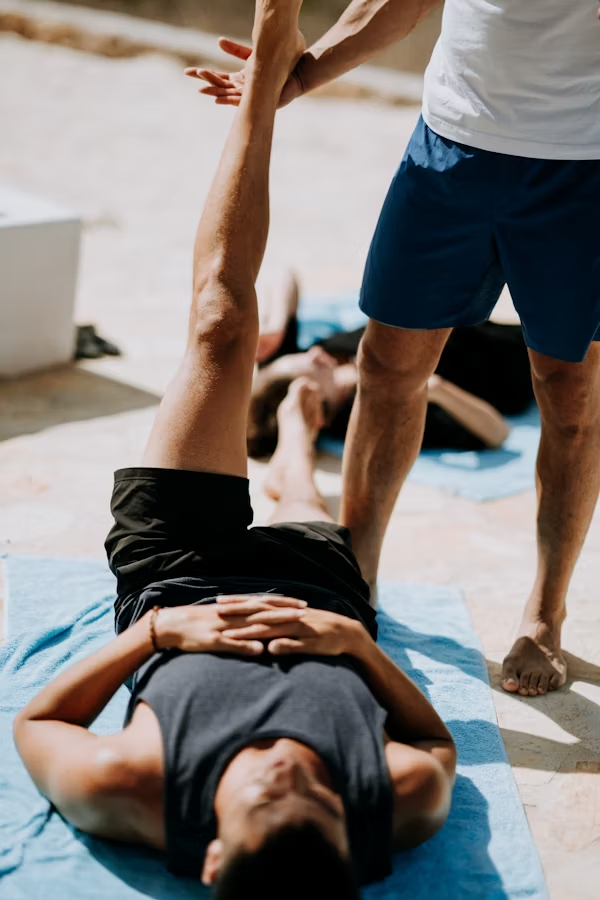
A sports massage is a highly targeted form of massage therapy. It focuses on the body’s soft tissues—muscles, tendons, and fascia—that are stressed from repetitive and strenuous activity.
Beyond the “Relaxing Spa Day”
Unlike a gentle Swedish massage that uses long, flowing strokes to promote general relaxation, a sports massage is a hands-on, problem-solving session. Your therapist is part-detective, part-body-mechanic. They’re hunting for trigger points (those nasty knots), muscle imbalances, and areas of tension that are causing you pain or limiting your movement.
The techniques are more vigorous and may include:
- Deep tissue work
- Stretching (often, you’ll be moved around on the table)
- Trigger point therapy (applying direct pressure to knots)
- Myofascial release (working on the connective tissue)
The Core Goals: Prevention, Recovery, Performance
A sports massage isn’t just one thing; it’s a tool with three main jobs:
- Recovery: This is the most common reason people go. It helps to reduce muscle soreness, flush out metabolic waste (like lactic acid), and calm the nervous system after a tough workout.
- Prevention: This is the smartest reason to go. Regular sessions can identify and fix small muscle imbalances before they turn into big, painful injuries.
- Performance: By improving flexibility, increasing your range of motion, and reducing muscle tension, a good sports massage can literally help you run faster, lift heavier, or just move better.
Is It Just for Athletes? (Spoiler: No)
This is the biggest myth out there! We call it a “sports” massage, but it should really be called an “active person’s” massage.
You are a perfect candidate if you are:
- The “Weekend Warrior”: You’re all-in on that Friday paddleboard session or the Saturday morning Padel match. A sports massage helps you recover so you’re not walking like a robot by Monday.
- The Dedicated Gym-Goer: You hit F45, Barry’s, or your local gym 4-5 times a week. Your body is under constant (good) stress. This massage is your essential maintenance.
- The “Office Athlete”: This is the one people forget. Sitting at a desk for 8-10 hours a day is a sport, and not a healthy one. That “computer neck,” tight chest, and locked-up lower back? A sports massage is exactly what you need to undo that damage.
- The Person in Recovery: If you’re dealing with a non-acute injury (with your doctor’s approval), a rehabilitative sports massage can be a game-changer for speeding up healing.
The Big Debate: Sports Massage vs. Deep Tissue vs. Swedish in Dubai
This is a huge point of confusion, and many spas in Dubai don’t make it easy, often using the terms interchangeably. Let’s break it down so you can book with confidence.
Why People Get Them Confused
Both sports massage and deep tissue massage involve firm pressure and work on deeper layers of muscle. This is where the confusion starts. However, their goals are completely different.
- Deep Tissue focuses on chronic, generalized muscle tension. The therapist will work slowly and deeply across all your major muscle groups (like the back and hamstrings) to release long-standing, habitual tightness.
- Sports Massage is much more specific. It targets muscle groups that are relevant to your activity or injury. If you’re a runner, the therapist will spend a lot of time on your calves, quads, and glutes. If you’re an office worker, it’ll be your neck, shoulders, and forearms.
A Simple Breakdown
Here’s an easy table to help you figure out what’s what.
| Feature | Sports Massage | Deep Tissue Massage | Swedish Massage |
| Main Goal | Performance, injury prevention, recovery from a specific activity. | Relieve chronic muscle tension and knots all over. | General relaxation and stress relief. |
| Pressure | Varies (can be light or deep) | Firm to very deep. | Light to medium. |
| Techniques | Stretching, trigger points, joint mobilization, friction. | Slow, deep strokes, and friction against the muscle grain. | Long, gliding strokes (effleurage), kneading. |
| Best For… | Athletes, gym-goers, “office athletes,” injury rehab. | People with chronic, widespread pain, knots, and posture issues. | First-timers, stress management, a relaxing treat. |
Which One Do You Actually Need?
- Book a Swedish Massage if: “I’ve had a stressful week, and I just want to relax and switch off for an hour.”
- Book a Deep Tissue Massage if: “I feel generally stiff and ‘stuck’ all over, and I’ve felt this way for months.”
- Book a Sports Massage if: “My neck is killing me from my desk,” OR “My legs are dead from my run,” OR “I want to prevent shin splints.”
The Real-World Benefits: Why It’s Worth the Hype
Okay, so it helps with recovery. But what does that feel like? Why would you spend your hard-earned Dirhams on this?
1. Supercharged Recovery & Beating DOMS
You know that feeling, two days after a heavy leg day, when you can’t walk down the stairs? That’s DOMS (Delayed Onset Muscle Soreness). A sports massage, especially a post-event one, helps to increase blood flow and flush out the metabolic byproducts that contribute to this soreness. You’ll simply bounce back faster.
2. Kicking Pain to the Curb
Got a “knot” in your shoulder that feels like a golf ball? Or a lower back that screams every time you bend over? A sports massage is designed to find those trigger points and convince them to release. It can dramatically reduce pain from both acute soreness and chronic, nagging issues.
3. Unlocking Your Mobility & Flexibility
When your muscles are tight and “glued” together, your movement is restricted. A sports massage helps to break down adhesions (scar tissue) and release tight fascia. The result? You’ll feel “looser.” You’ll have a better range of motion in your squats, your golf swing will feel smoother, and you’ll be able to turn your head to check your blind spot without wincing.
4. The Secret Weapon for Injury Prevention
Most non-contact injuries happen for a simple reason: an imbalance. For example, tight hip flexors (from sitting) can cause your glutes to “switch off,” which forces your lower back to work overtime. A good therapist can spot this pattern and release the tight hips before your back goes into spasm. This is proactive healthcare.
5. The Mental Boost: Reducing Stress
Don’t underestimate this one. While the massage itself can be intense, the release it provides is a huge mental relief. It helps to lower cortisol (the stress hormone) and can improve your sleep quality, which is critical for recovery and overall health in a city that never sleeps.
The 4 Types of Sports Massage: Timing is Everything
To get the most out of your session, you need the right type of massage at the right time. A good therapist in Dubai will ask you about your training schedule before they start.
Pre-Event: The “Get Ready” Massage
- When: 30 minutes to 24 hours before your big game, race, or event.
- What it is: A shorter, faster-paced, and more invigorating massage. It uses techniques like quick strokes, tapping, and gentle stretching to warm up the muscles, increase blood flow, and get you “fired up” and ready to go. It’s not deep.
Post-Event: The “Cool Down” Massage
- When: Within 1 to 72 hours after your event.
- What it is: This is all about recovery. The goal is to calm the nervous system, flush out waste, and reduce the micro-trauma from the exertion. The pressure is generally lighter and more soothing, focusing on bringing the muscles back to their normal resting state.
Restorative/Maintenance: The “Tune-Up”
- When: Any time, usually on a regular schedule (e.g., once every 2-4 weeks).
- What it is: This is the most common type and the core of a good sports massage plan. It’s a comprehensive session designed to work on your chronic issues, break down old knots, improve flexibility, and treat any new niggles before they become problems.
Rehabilitative: The “Fix-It” Massage
- When: As part of a recovery plan from a specific injury (and with a doctor’s/physio’s green light).
- What it is: This is highly specific, clinical work focused on the injured area. The goal is to break down scar tissue, promote healing, and restore normal function and range of motion.
Your First Sports Massage in Dubai: What to Expect (The No-Surprise Guide)
Okay, you’re convinced. You’ve booked your first session. Here’s a play-by-play of what will (and should) happen.
Before You Go: Prepping for Your Session
- Hydrate: Drink plenty of water on the day of your massage. Your muscles will be more pliable.
- Don’t eat a huge meal: You’ll be lying on your stomach. Enough said.
- Have your “story” ready: Be prepared to tell the therapist why you’re there. “My right shoulder hurts when I do this,” or “I’m training for a 10k, and my calves are always tight.”
The Consultation: “This Isn’t a Guessing Game”
A red flag is a therapist who just says, “Okay, lie down.” A good therapist will spend 5-10 minutes talking to you first. They’ll ask about:
- Your activity level and sport.
- Your pain points and problem areas.
- Any past injuries.
- Your goals for the session.They might even do a quick visual assessment, asking you to bend over or move your arms to see your range of motion.
What to Wear (And What Not to Wear)
You’ll be asked to undress to your level of comfort. For most people, this means down to your underwear. The therapist will leave the room while you get undressed and get onto the table under a sheet or towel. They will only uncover the specific part of your body they are working on (e.g., your left leg, your back). Your modesty is always protected.
The Big Question: Is It Going to Hurt?
Here’s the honest answer: it might be uncomfortable, but it should never be unbearable.
There’s a difference between “good pain” and “bad pain.”
- Good Pain (or “Therapeutic Discomfort”): This is when the therapist hits a trigger point, and it feels intense but… “right.” You might find yourself tensing up, but you can still breathe through it. This is productive.
- Bad Pain: This is a sharp, stabbing, or pinching pain. It’s the kind of pain that makes you hold your breath, wince, or want to jump off the table. This is not productive and can actually make the muscle tense up more.
You are in control. Your therapist needs your feedback. “A bit less pressure there, please” or “That’s the spot, you can go a bit deeper” is essential communication.
After the Session: The “Jelly Legs” Feeling and What to Do Next
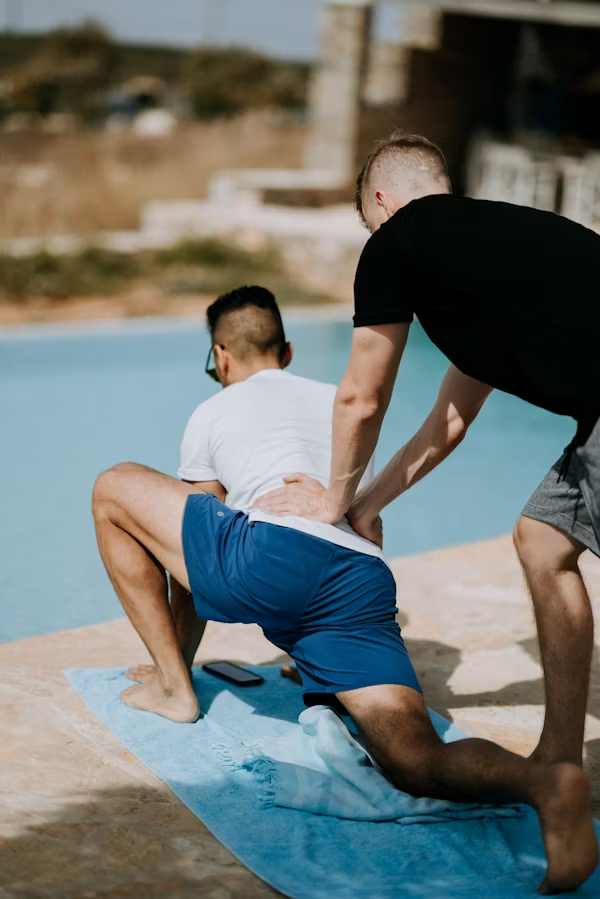
When you get off the table, you might feel a bit light-headed, floaty, or like you have “jelly legs.” This is totally normal.
- Hydrate, Hydrate, Hydrate! This is the #1 rule. You’ve released a lot of metabolic waste from your muscles, and you need to flush it out. Drink more water than you usually do.
- You might be sore tomorrow. It’s common to feel a bit tender the day after a deep sports massage, similar to how you feel after a new workout. This is normal and should fade in 24-48 hours.
- Have a warm bath. An Epsom salt bath can be a fantastic way to soothe the muscles and continue the relaxation process.
- Take it easy. Don’t plan a heavy-duty workout for the day after your first deep session. Go for a light walk and let your body absorb the work.
Finding the Right Sports Massage Therapist in Dubai (This is Key)
Dubai has thousands of massage options, from luxury hotel spas to dedicated physiotherapy clinics. This is where it gets tricky. A great sports massage is 90% therapist, 10% everything else.
What to Look For: Qualifications vs. “Good Hands”
You need both.
- Qualifications: Look for therapists at physiotherapy centers, sports medicine clinics, or dedicated wellness centers. They are more likely to have certifications in sports massage, physiotherapy, or sports science (e.g., a “DHA-licensed” therapist). A therapist at a 5-star hotel spa is often (though not always) trained more for relaxation than for clinical work.
- “Good Hands” (Experience): Read reviews. Do they mention the therapist by name? Do the reviews sound like they’re from active people? “Ahmed at [Clinic] finally fixed my runner’s knee” is a much better sign than “The massage was nice.”
Red Flags to Watch Out For
- The “One-Size-Fits-All” Massage: The therapist doesn’t ask you any questions and just starts a generic routine.
- No Communication: They don’t check in with you about pressure.
- “Pain is Gain” Mentality: A therapist who says “you just have to push through the pain” is a massive red flag.
- Vague Pricing: You should know exactly what you’re paying for and for how long.
How Much Does a Sports Massage Cost in Dubai? (An Honest Look)
The price can vary wildly, from 150 AED at a small center to over 700 AED at a luxury hotel.
Why You Shouldn’t Just Hunt for the Cheapest Deal
This is one area where you often get what you pay for. That 150 AED massage is almost certainly a general “deep tissue” rub-down, not a specialized sports massage from a trained therapist. You’re not just paying for the time; you’re paying for the therapist’s years of training in anatomy, physiology, and injury mechanics.
A General Cost Breakdown
This is a rough guide, but it’s what you can generally expect.
| Type of Venue | Average Cost (60 min) | Average Cost (90 min) |
| Specialized Physio/Sports Clinic | 400 – 550 AED | 600 – 800 AED |
| High-End Hotel Spa | 550 – 750 AED | 800 – 1100 AED |
| Independent Wellness/Massage Center | 300 – 450 AED | 450 – 650 AED |
| At-Home Service (Licensed) | 350 – 500 AED | N/A |
Pro-Tip: Many specialized clinics in Dubai offer packages (e.g., “Buy 5, Get 1 Free”) which can significantly bring down the per-session cost. If you find a therapist you love, this is the most economical way to go.
How Often Should You Really Be Getting One?
This depends entirely on your goals, activity level, and budget.
- For the Serious Athlete (In-Season): Once a week, or even twice, might be necessary.
- For the Regular Gym-Goer: A maintenance session every 2-4 weeks is a fantastic sweet spot.
- For the Desk-Bound Professional: Once a month is a brilliant way to undo the damage of sitting and prevent chronic pain from setting in.
Conclusion: Stop “Pushing Through the Pain”
Your body is the only one you’ve got, and living in a demanding city like Dubai requires it to be in good working order.
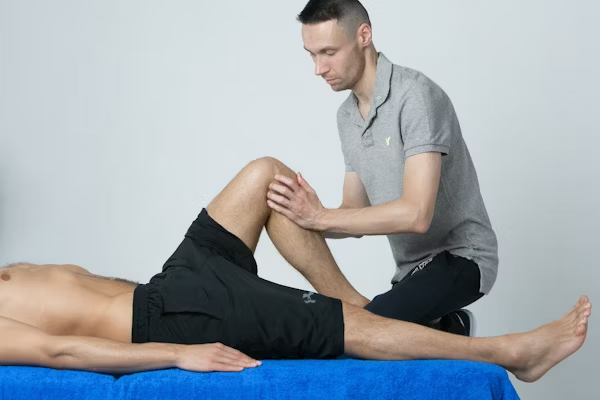
A sports massage isn’t a luxury “pampering” session. It’s essential maintenance. It’s a tool for longevity. It’s an investment in feeling, moving, and living better.
You don’t need to be an elite athlete. You just need to be a person who wants to get the most out of their body and stop letting aches and pains call the shots.
Your body will thank you for it.
Frequently Asked Questions (FAQs) About Sports Massage
1. What’s the main difference between a sports massage and a deep tissue massage?
The main difference is the goal. A deep tissue massage aims to relieve chronic tension across the entire body (like a stiff back and neck). A sports massage is highly targeted to specific muscles and joints used in your sport or activity (like a runner’s IT band) to prevent injury, improve performance, or speed up recovery.
2. I don’t play sports. Can I still get a sports massage?
Absolutely! This is one of the most common questions. If you have a job that involves repetitive motion (like typing at a desk), or if you’re a “weekend warrior” who plays Padel or hits the gym, you are a perfect candidate. We often call it an “active person’s massage” because it’s for anyone who puts stress on their body.
3. How often should I get a sports massage in Dubai?
It depends on your activity level. A professional athlete might get one 1-2 times a week. A regular gym-goer or office worker will see fantastic benefits from a maintenance session once every 2 to 4 weeks to manage pain and prevent new injuries.
4. Will I be sore after my sports massage?
It’s very common to feel a little tender or sore for 24-48 hours after a sports massage, especially if it was a deep session or your first time. This is a normal response, similar to the soreness you feel after a good workout. Drinking plenty of water after your session will help a lot.
5. What should I do after my sports massage session?
The top three things to do are: 1. Hydrate (drink lots of water to flush out toxins), 2. Rest (avoid any intense exercise for at least 24 hours), and 3. Listen to your body (a warm bath with Epsom salts can help, but just take it easy).